Designing with Muffin: A Guide to This Bold Sans Serif
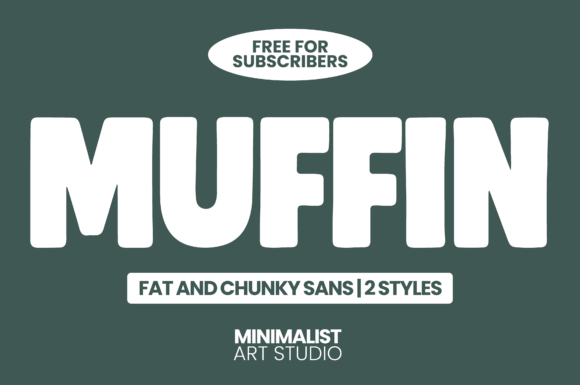
When a project calls for a typeface that makes an immediate, confident statement, the search often leads to a specific category: the fat sans serif. These are fonts built for presence, designed to occupy space and command attention. Muffin is a prime example of this philosophy in action. It’s a premium font that doesn't whisper; it speaks with a clear, friendly, and substantial voice. At its core, Muffin is a chunky sans serif font characterized by its thick strokes, rounded terminals, and geometric foundation. It balances visual weight with a surprising lightness, avoiding the heavy, oppressive feeling some bold fonts can create. This makes it a versatile creative font for designers who need impact without sacrificing approachability.
The personality of Muffin is one of confident minimalism. Its forms are clean and uncluttered, rooted in modern typography principles. The rounded edges soften the inherent boldness, injecting a dose of friendliness and warmth. This duality is its strength. It can feel playful and retro one moment, and sleekly contemporary the next, depending entirely on its context and color pairing. Think of it as the typographic equivalent of a well-designed, chunky ceramic mug—solid in the hand, pleasing to the eye, and perfectly functional. For any designer building a brand identity, this font offers a foundation that feels both substantial and adaptable.
Practical Applications: Where Muffin Excels
Understanding a font's character is one thing; knowing where to deploy it is where strategy meets art. Muffin's design makes it exceptionally suited for applications where first impressions and legibility at scale are paramount. It shines brightest as a display font, taking center stage in headlines, hero sections, and logo design. Its high legibility, even at smaller sizes, also makes it a reliable choice for subheadings, pull quotes, and navigation elements in web design.
In the realm of packaging design, Muffin is a natural fit. Its bold structure ensures product names and key information are instantly readable on crowded shelves, whether on a coffee bag, a cosmetic label, or a snack box. For editorial design, it can bring a modern, energetic feel to magazine covers, chapter titles, and section headers, cutting through dense body text. In the fast-paced world of social media graphics, its thick letters maintain clarity even on small mobile screens, making it ideal for Instagram stories, YouTube thumbnails, and promotional banners. Entrepreneurs and small business owners will find it particularly useful for creating merchandise, from t-shirts to tote bags, where a simple, bold statement is needed.
Integrating Muffin into Your Design Workflow
Adopting a new typeface is more than just a download; it's about integration. The first step is evaluating project fit. Ask yourself: does the project's tone benefit from boldness and friendliness? A tech startup aiming for a sleek, corporate image might pair Muffin with a minimalist serif font for a dynamic contrast. A children's brand or a local bakery might use it alongside a gentle script font or handwritten font to amplify its playful side. The two included styles of Muffin offer a starting point for creating this visual hierarchy—using one for major headlines and the other for supporting text.
When testing font pairings, the goal is harmony and contrast. Since Muffin carries significant visual weight, it pairs best with typefaces that are lighter in stroke or more delicate in form. A classic, elegant serif can provide a sophisticated counterbalance. A simple, geometric sans serif for body text can create a clean, modern system. Avoid pairing it with another heavy, chunky font, as this can lead to visual competition and clutter. Always test your chosen combination in context: mock it up on a business card, a website header, and a social media post to assess real-world readability and impact.
From a practical standpoint, confirm the licensing for your intended use. Muffin is noted as being free for subscribers, but always verify the terms for commercial projects like client work, merchandise, or paid digital products. Proper licensing is a non-negotiable part of professional practice. By treating Muffin not just as a downloaded file but as a strategic component in your toolkit, you can leverage its bold, chunky charm to give your projects a distinct and memorable voice. It’s a design asset that encourages you to be bold with your ideas, providing the typographic muscle to make them seen and understood.