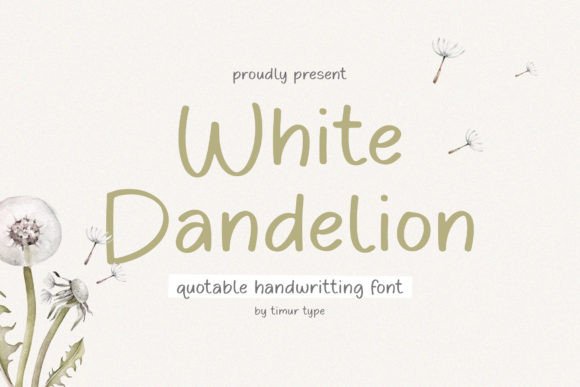
White Dandelion: A Handwritten Font with a Friendly, Natural Feel
When you first see the White Dandelion typeface, it feels like a breath of fresh air. It’s not a rigid, structured script that demands formality. Instead, it offers a sweet and friendly handwritten font style that feels genuinely approachable. Think of it as the typographic equivalent of a warm smile or a handwritten note left on the kitchen counter. Its strokes are organic, mimicking the natural flow of a pen on paper without looking messy or childish. This unique style makes it a versatile asset for anyone looking to inject personality into their work. The only limit is your imagination, as the font adapts beautifully to a wide range of design contexts.
The Personality Behind the Typeface
Understanding the visual characteristics of White Dandelion helps in knowing where to apply it. It leans heavily into a casual aesthetic. The letterforms are connected in a way that feels fluid, yet they maintain enough separation to ensure legibility at various sizes. Unlike some overly decorative script fonts that can look like tangled wires, this font prioritizes clarity while keeping its artistic charm. It has a modern typography sensibility—meaning it respects current design trends that favor authenticity over polished perfection. This is a typeface that doesn't scream for attention but rather invites the viewer in.
For designers and entrepreneurs, this distinction is vital. A logo design needs to be memorable, but it also needs to be versatile. Using White Dandelion for a brand identity suggests that the brand is creative, approachable, and perhaps artisanal. It tells a story of care and creativity. It works exceptionally well for businesses that want to stand out from the corporate, sans serif font crowd without sacrificing professionalism. It is a premium font choice that signals high quality, but it does so with a down-to-earth vibe.
Where White Dandelion Shines Brightest
The applications for this handwritten font are extensive. Because it is a display font, it is designed to be used for headlines, logos, and short bursts of text where impact is key. However, its "sweet and friendly" nature means it fits into specific niches perfectly.
Branding and Logo Design
If you are launching a small business, your logo is often the first interaction a customer has with your brand. Using White Dandelion can set a welcoming tone immediately. It is particularly effective for businesses in the wellness, beauty, food, or lifestyle sectors. Imagine a bakery logo or a boutique clothing tag using this font—it instantly communicates a handmade, personal touch. When paired with a clean sans serif font for body text, it creates a balanced visual hierarchy that guides the eye naturally.
Packaging and Editorial Design
In packaging design, shelf appeal is everything. A product needs to stand out in a split second. This creative font can be used to highlight product names or key ingredients, adding a layer of sophistication and charm. Similarly, in editorial design—such as magazines or blogs—White Dandelion works wonderfully for pull quotes or chapter headers. It breaks up the monotony of long blocks of text and adds visual interest that keeps readers engaged. It turns a standard layout into something more dynamic and inviting.
Digital and Social Media Graphics
The digital space is crowded. To stop the scroll, your content needs personality. White Dandelion is an excellent choice for social media graphics, Instagram stories, and Pinterest pins. Its handwritten style feels native to the platform, where personal connection drives engagement. Whether you are a content creator sharing a quote or a marketer announcing a sale, this font adds a human element that sterile, standard fonts often lack. It helps in building a consistent brand voice across all digital touchpoints.
Practical Guidance for Using the Font
While White Dandelion is incredibly fitting to a large pool of designs, successful implementation requires some strategic thinking. Here is how to get the most out of this design asset.
Readability and Hierarchy
Because this is a handwritten script, readability at small sizes can be a concern. It is best used for larger text—think headings, subheadings, and titles. Avoid using it for long paragraphs of body copy; that is the job of a reliable serif font or sans serif font. When you use White Dandelion for headlines, ensure there is enough contrast with your body text. This contrast creates a strong visual hierarchy, making your layout easier to scan and more visually appealing.
Font Pairing Strategies
A great design rarely relies on a single typeface. White Dandelion pairs beautifully with neutral fonts. Try combining it with a geometric sans serif for a modern, clean look. Alternatively, pair it with a classic serif font for a more traditional, elegant feel. The key is balance. Since White Dandelion has a lot of character, your supporting font should be understated to avoid visual clutter. This pairing strategy ensures your message remains clear while your design retains its unique flair.
Licensing and Professional Use
For small business owners and entrepreneurs, understanding licensing is non-negotiable. White Dandelion is a commercial font, meaning it is designed for professional use. Before incorporating it into your permanent brand assets, review the licensing terms to ensure it covers your specific needs—whether for web design, print materials, or merchandise. Investing in a premium font ensures you have the legal right to use the design commercially, protecting your business and supporting the creators who develop these valuable tools.
Final Thoughts on Creative Potential
Ultimately, White Dandelion is more than just a collection of letters; it is a tool for storytelling. Its natural, unique style allows designers, marketers, and hobbyists to express ideas with warmth and authenticity. Whether you are designing a wedding invitation, crafting a brand identity for a new startup, or creating eye-catching social media content, this typeface offers a reliable way to connect with your audience on a human level. It proves that typography can be both professional and personal, bridging the gap between business and creativity. If you are looking to refresh your design toolkit, exploring what White Dandelion has to offer is a worthwhile step.